
Talking about the role of the voice in cinema means questioning what, despite appearances, can be said to be one of the cinematic text’s most complex and problematic components. Today’s consumer of the film industry’s products, addicted to the modern code of audiovisual texts, can hardly imagine the alienating effect of a type of show that, in its early form, was instead completely devoid of the voice and almost total renounced to the verbal medium, except for small intertitles.
As Rudolf Arnheim wrote in his Film as Art (1957), the silent cinema, with its exaggerated facial mimicry and gestures, had nonetheless coined a universal language, one that was immediately understandable in all parts of the world, regardless of linguistic barriers: a gestural language, impossible to replace with words.
The art of silent cinema had introduced a new existential paradigm: Der sichtbare Mensch (The visible man), as in the title of Balázs’s book of 1924. This man could be neither listened to nor read since he was forced to express himself through a visual language. Now, by putting verbal language and words at the center of the film medium, sound cinema determined the rise of a new medial language.
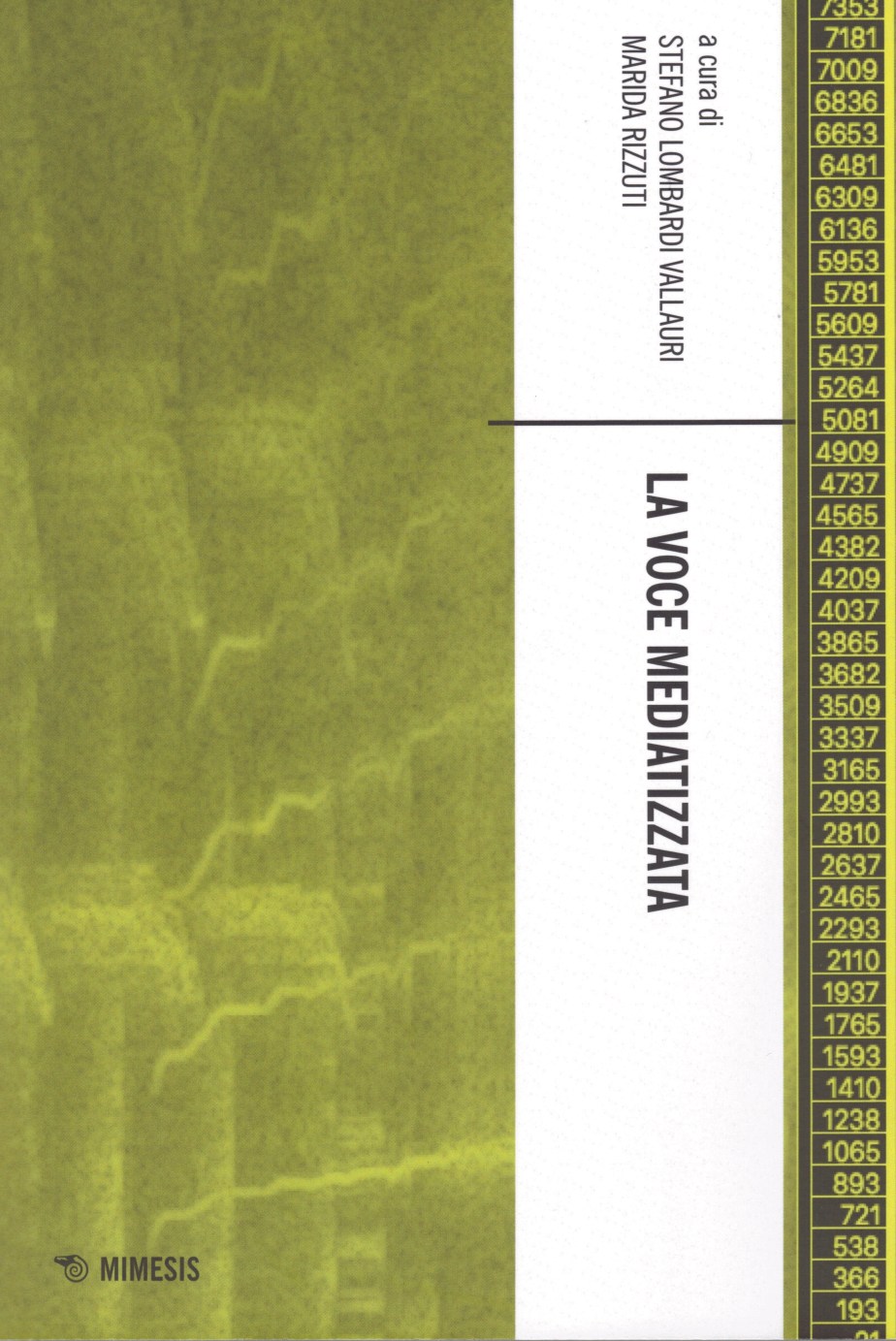
Francesco Finocchiaro, Il cinema parlante. Spunti per una drammaturgia della voce da Fritz Lang a Terrence Malick. In La voce mediatizzata, edited by Marida Rizzuti and Stefano Lombardi Vallauri. Milan: Mimesis, 2019, pp. 69–92 (read it here).

 FMJ Project
You must be logged in to post a comment.