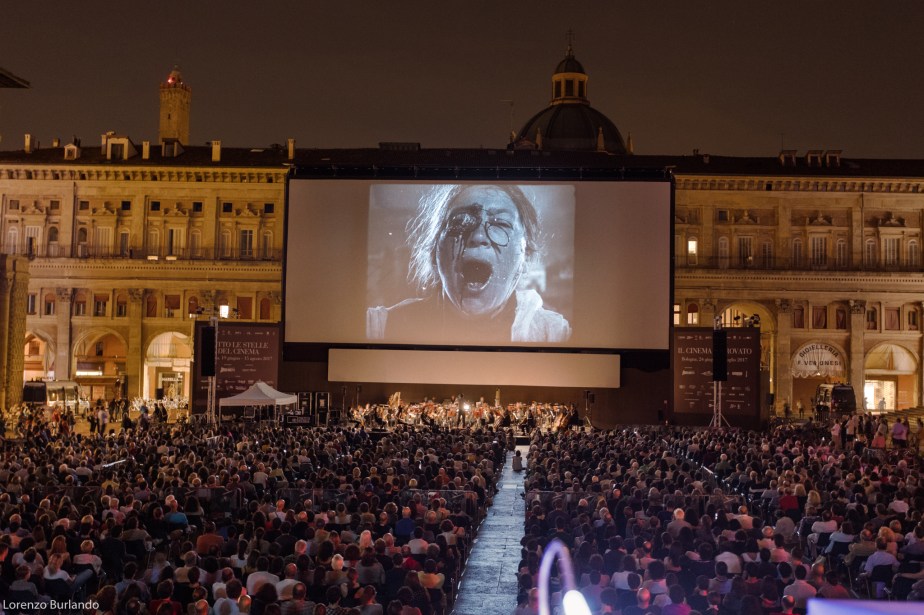
Naum Kleiman at “Il Cinema Ritrovato” (Bologna, June 26, 2017): The most authoritative Eisenstein scholar, conversating with Bernard Eisenschitz on “cubist” montage and “mise en cadre” in Bronenosets Potemkin (1925).
Author: Francesco Finocchiaro
FMJ Official Logo
The FMJ Research Project is delighted to present its official logo.
The FMJ Logo elaborates graphically on the capital letters of three keywords – Film, Music, and Journalism – which sum up the project’s main topic.
The FMJ official logo is created by Maura Marinozzi Art Director, Graphic & Communication, Bologna.
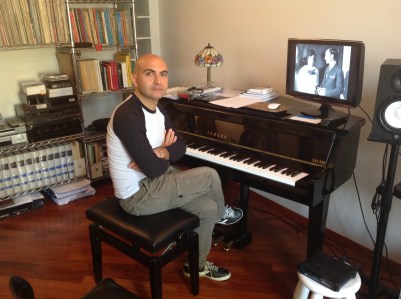
On air at RAI Radio3 Suite

Francesco Finocchiaro on air at RAI Radio3 Suite, conversating with Francesco Antonioni on Musical Modernism and Cinema. On May 31st, 2017.
When Jazz Meets Cinema
At the recent conference When Jazz Meets Cinema (Lovere, May 5-7, 2017), Francesco Finocchiaro and Leo Izzo held a lecture on jazz numbers in Gottfried Huppertz’s score for Metropolis (1927) by Fritz Lang. The paper gave rise to a lively discussion that addressed many issues concerning the reception of the jazz music in Europe between the two world wars.
Francesco Finocchiaro & Leo Izzo, ‘Metropolis’ di Fritz Lang: la città del futuro nell’età del jazz, International Conference “When Jazz Meets Cinema”, May 5-7, 2017, Lovere (BG)
Metropolis in the Jazz Era
At the forthcoming International Conference When Jazz Meets Cinema, May 5-7, Lovere (BG), Project Leader Francesco Finocchiaro, together with jazz scholar Leo Izzo, will give a lecture on Gottfried Huppertz’s original score for Metropolis (1927) by Fritz Lang.
In their four-hand paper, Finocchiaro and Izzo will deal with two remarkable film scenes accompanied by jazz music. The analysis will focus on the symbolical meaning associated with jazzy sound and language in the music accompaniment for silent movies.
An Interview with Daniele Furlati
PI Francesco Finocchiaro has recently released an interview with composer Daniele Furlati, who authored a new accompaniment music for Augusto Genina’s silent movie Addio, giovinezza! (1918).
The new score, which elaborates on musical themes derived from an operetta by Giuseppe Pietri, will premiere in Bologna, at the Festival Il Cinema Ritrovato.
The interview with Daniele Furlati will appear soon in the Italian magazine Amadeus.
Organic-mechanical metaphors in the musical discussion between the two World Wars

The discussion on music’s mechanization exploded in German print journalism between the two World Wars, when a series of technological innovations (radio, phonograph, cinematograph and sound cinema) caught the attention of the public and swept through the music world, shaking its very foundations.
In this sharply polemical debate, the metaphorical antithesis “organism-mechanism” reflected the contraposition between different thought systems and structured a generational opposition.
In other words, “organic music” was the music of the Nineteenth Century and that of the followers of the Classical-Romantic tradition; by contrast, “mechanical music” was the music of radiophonic, electro-acoustic and cinematic experiments, carried out by the new generation of composers at the Baden-Baden Festival.
In the framework of this ideological debate, the organic-mechanical metaphors constitute the point of connection between compositional structures, music analytical categories, and exegetical processes. Metaphors represent the hinge, the element of mediation between the categorization of the compositional structures and the hermeneutic processes that forge the aesthetic discourse. They mediate between the territories of poetics and aesthetics, where the verbal discourse has the central role, and the immanent structures.
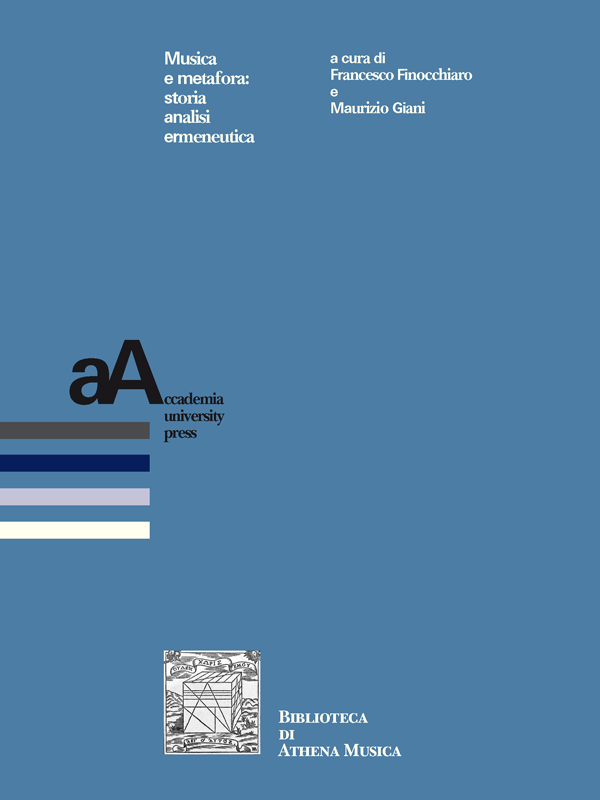
Francesco Finocchiaro, “Musica organica versus musica meccanica”. Un’antitesi metaforica nel dibattito musicale fra le due guerre, in Musica e metafora: storia analisi ermeneutica, edited by F. Finocchiaro and M. Giani, Torino, Accademia University Press, 2016, pp. 117-154 (Biblioteca di Athena Musica, 1) (Read it on Academia.edu).
Project Presentation
The research project on Film Music as a Problem in German Print Journalism will be presented at the University of Vienna, on 23 March 2017.
Project leader Dr. Francesco Finocchiaro will introduce the main issues of the ongoing project.
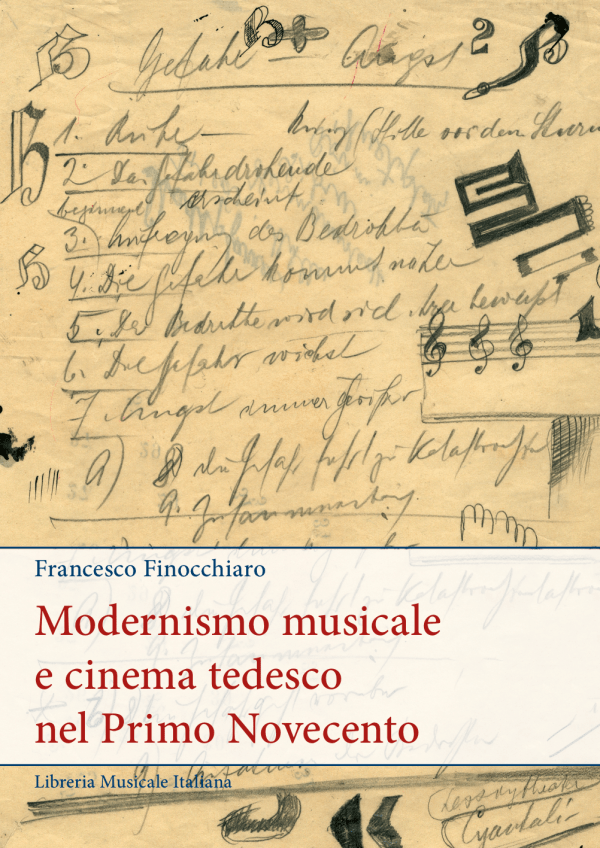
Modernismo musicale e cinema tedesco nel Primo Novecento, 2017

Interrogare i rapporti tra il modernismo musicale e il cinema tedesco significa additare una via di ricerca non ortodossa: non una delle direttrici principali, certo, ma un sentiero finora poco esplorato. In realtà, i rappresentanti del modernismo musicale, da Alban Berg a Paul Hindemith, da Kurt Weill a Hanns Eisler, un rapporto con il cinema lo ebbero, eccome. Fu, sì, un rapporto complesso e contraddittorio, nel quale il cinema figura talora più come riferimento estetico che come realtà fattuale: in ogni caso, ricca di conseguenze fu la recezione in ambito musicale del linguaggio e dell’estetica del medium cinematografico. La scoperta del cinema assume in ciò la pregnanza e la coerenza di un vero e proprio paradigma estetico, che sostiene il progetto modernista nella sua intima essenza. Il confronto con il medium d’avanguardia per eccellenza rappresenta un vettore del modernismo musicale: un nuovo paradigma estetico per quel processo di travisamento volontario, di revisionismo creativo, quando non di deliberata sovversione della tradizione musicale classico-romantica, in cui si realizzò storicamente il “sogno dell’Alterità” della generazione modernista.
Francesco Finocchiaro, Modernismo musicale e cinema tedesco nel Primo Novecento, Lucca, LIM, 2017.
Music and the Moving Image, 2016/3

The Vindobona series by Universal Edition is a unique case among mood music collections for “silent” film accompaniment. It is a collection that, starting in 1927, published salon orchestra adaptations of music by, to name but a few, Strauss, Mahler, Schreker, Janácek, Bartók, Křenek, Weill, and Zemlinsky. This list by itself is enough to make it a document of undoubted historical value—a document that helps us understand the specificities, as well as the limitations, of musical Modernism’s reception in the practice of the musical accompaniment for moving pictures in German-speaking countries.
When it was launched in 1927, the Vindobona was emphatically introduced by its publisher as the first collection of modern music by modern composers for film use. Its importance is limited as far as actual musical practice is concerned on account of evident miscalculations in its editorial design. Nonetheless, the Vindobona Collection has much to tell us. Its analysis allows us to infer, at least indirectly, important information about the routine of music for cinema. The Vindobona project reflects, at least in its approach, a series of significant changes in the aesthetics of cinema presentation and, in general, of the social dimension of cinema.
This essay considers first of all the structure of the collection and its genesis, on the basis of unpublished archive materials from the Department of Music of the Austrian National Library and the Historical Archive of the Universal Edition. It then moves on to analyze the collection’s editorial goals, before finally evaluating its particularly problematic relationship with the contemporary practices and aesthetics of cinematic music.
Francesco Finocchiaro, The ‘Vindobona-Collection’ of the Universal Edition, “Music and the Moving Image”, IX n. 3, Fall 2016, pp. 38-56 (Read it on Academia.edu).
You must be logged in to post a comment.