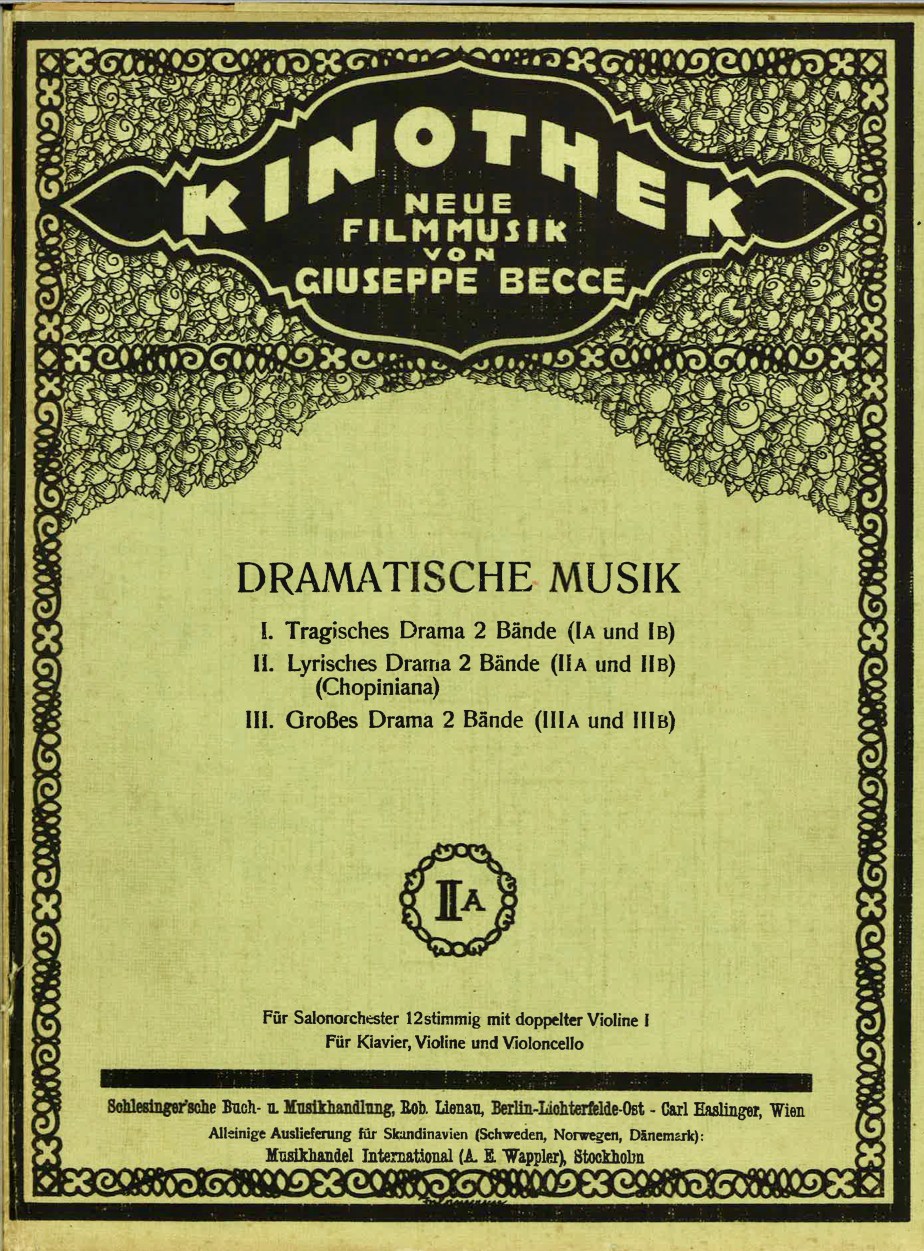
At the Musicological Department’s “Semesterfrüchte 2019”, Marlene Penninger, Marie Huber, and Chiara Schmidt performed “Notturno amoroso”, a film music piece drawn from Giuseppe Becce’s Kinothek (1919-26).

At the Musicological Department’s “Semesterfrüchte 2019”, Marlene Penninger, Marie Huber, and Chiara Schmidt performed “Notturno amoroso”, a film music piece drawn from Giuseppe Becce’s Kinothek (1919-26).
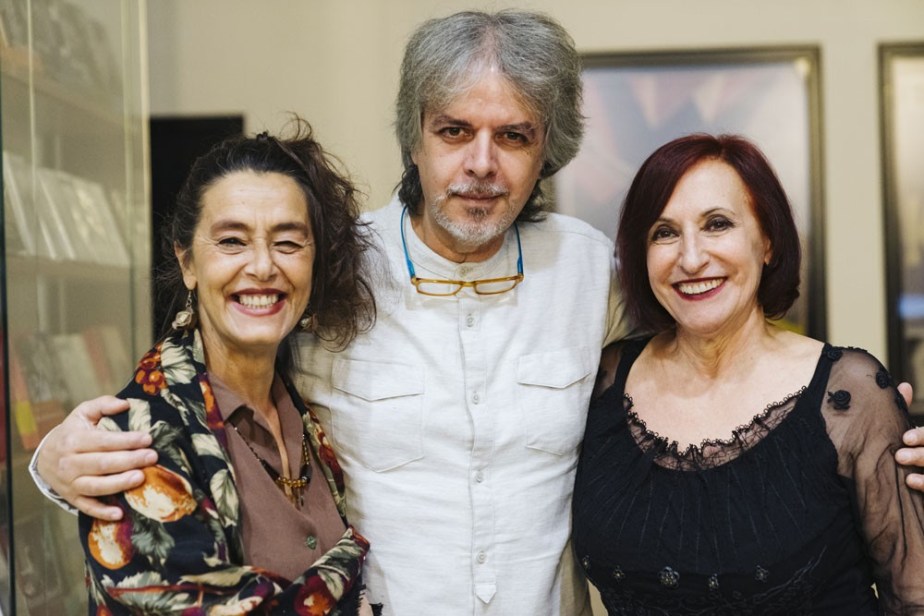
On November-December 2018, the Austrian Filmmuseum dedicated a film retrospective to Elvira Notari (1875–1946), the Neapolitan film pioneer of the early silent era. Italian folk music stars Lucilla Galeazzi, Dolore Melodia, and Michele Signore contributed to outstanding live musical accompaniments for the films ‘ A Santanotte (1922), È piccerella (1922), Fantasia ‘e surdato (1926), as well as Roberto Roberti’s masterpiece Napoli che canta (1926).


From the 1st to 13th of October 2018, Dr. Francesco Finocchiaro exposed the FMJ research findings in the form of an Erasmus Teaching Mobility for students in composition at the “F. Venezze” Conservatory Rovigo.


PI Francesco Finocchiaro presented the FMJ Poster at the Annual Conference of the International Association of Music Libraries, Archives, and Documentation Centres, Leipzig, July 22–27, 2017.


Frank Borzage’s 7th Heaven (1927), restored by 20th Century Fox and MoMA, was one of the most exciting events at the Festival “Il Cinema ritrovato” 2018. The Orchestra del Teatro Comunale di Bologna performed a new film score written by Timothy Brock.
Francesco Finocchiaro, Seventh Heaven ovvero Il capolavoro ritrovato, “Amadeus”, July 2, 2018
Restored in 2017 by the MoMA of New York, Ernst Lubitsch’s film Rosita has been recently presented at the XXXII edition of “Il Cinema Ritrovato”, in Bologna, in a musical reconstruction edited by Gillian Anderson and performed by the Mitteleuropa Orchestra. The American composer and musicologist reconstructed Rosita‘s score on the basis of a 1923 cue sheet, drawn from the accompanying music by Louis Ferdinand Gottschalk.
Francesco Finocchiaro, Il Cinema ritrovato: Rosita di Ernst Lubitsch recupera le sue musiche, “Amadeus”, June 29, 2018
Interviewing Gillian Anderson and Timothy Brock upon their new silent film scores for Rosita (1923) and 7th Heaven (1927). Festival Il cinema ritrovato 2018, June 23 – July 1, 2018, Bologna
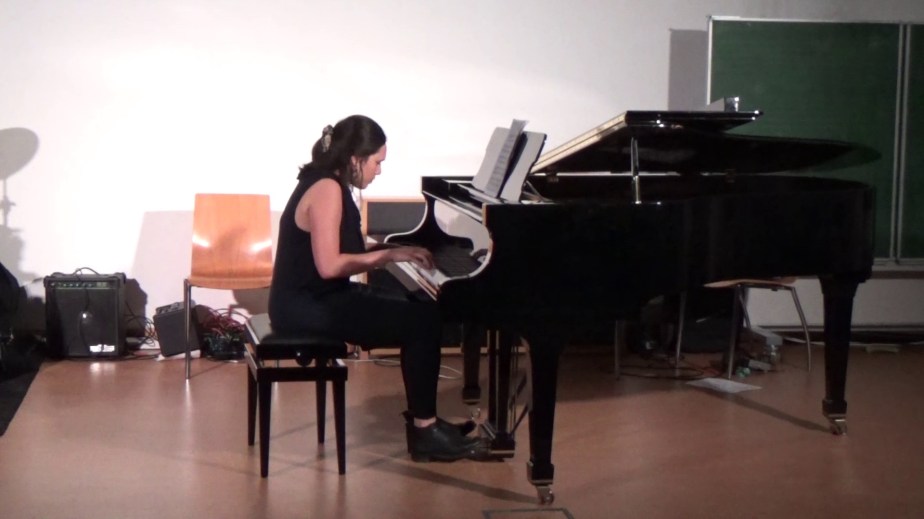
At the Musicological Department’s “Semesterfrüchte 2018”, Elena Minetti performed film music pieces drawn from John S. Zamecnik’s Sam Fox Moving Picture Music (1913-14).
At the Open Day of the University of Vienna’s Department of Musicology, Francesco Finocchiaro talked about silent film music, dwelling on music literature for cinematic use, performative practices, and critical reception. The pianist Elena Minetti played rare mood music pieces drawn from the Sam Fox Moving Picture Music (1913-14) by John S. Zamecnik.

“Greta spricht!” – In den 1930er Jahren revolutionierte der Tonfilm das Kino. Doch was bedeutete dieser Umbruch für die Filmmusik? Musikwissenschafter Francesco Finocchiaro sucht im journalistischen Diskurs der Stummfilm-Ära nach Antworten und macht seine Funde digital zugänglich.
Hanna Möller’s article on the FMJ Proejct is now available on Uni:View Magazin.
 The FMJ Project adhered to the Music Criticism Network.
The Music Criticism Network, managed by Massimiliano Sala, is a center for the dissemination and interaction of research groups and projects on music criticism. The Network organizes an annual international three-day conference. Furthermore, it provides a vehicle for the dissemination of scholarly works through the Music, Criticism, & Politics series (Brepols Publishers), as well as the Journal of Music Criticism.


The FMJ Project has been inserted into the Kulturerbe digital platform.
Kulturerbe digital is a project of EUBAM, a Working Group at the Institute for Museum Research – Preußischer Kulturbesitz, Berlin, devoted to European matters affecting libraries, archives, museums and monument protection.
 FMJ Project
You must be logged in to post a comment.